Friday, August 16, 2013

7 Lessons Learned from Working in Venture Capital

RPM Ventures' front page features a toy idea taking off.

This summer, I've had the fortune of interning as a Venture Capital analyst for RPM Ventures, a seed-stage Great Lakes venture fund that combines Silicon Valley startup culture with a Midwest work ethic.  On my last day of the internship, I've had some time to reflect on a few quick lessons I've learned.

1. It's about the entrepreneur.

This is one of the four core values that RPM Ventures espouses.  A solid leadership team is the driving force behind any venture, and is the first thing that VCs look at when evaluating a pitch.  You may have the greatest idea to start a business, but so may many others.  Your team is unique, and the individual chemistry and experience inherent in the team can be found only in one place.

2. Ideas are cheap - action is what defines you.

There's a great line in Christopher Nolan's Batman Begins that goes "It's not who I am underneath, it's what I do that defines me."  In the startup world, this has been well-known for a long time.  Plenty of people come up with an idea, and like to pitch it, but don't take measurable steps towards that goal.  Ideas are cheap and plentiful, but the action behind them isn't.
In the office, I used the silly term "Do-it-iveness" to describe the entrepreneurs we listened to who have a tendency towards action.  That do-it-iveness is what makes a want-repreneur into an entrepreneur.

3. Surround yourself with people smarter than you.

Marc Weiser, one of the managing directors at RPM Venures, stressed this gem to us during a lunch meeting.  It's oft-repeated, but Marc took it one step further, saying that when he's in a board meeting of a portfolio company, he wants everyone around him to be more knowledgable in the space, more passionate about the opportunity, and more driven to lead the company's success.  A venture capitalist is all of these things as well, of course, but if the management team isn't at the forefront of these three qualities, something is not right.

4. Burn the small forest

Josh Lin, the associate director at RPM, has this saying about "burning the forest behind you".  The idea is that, when you start out attempting to add value to your venture (by pitching your idea to venture capitalists or releasing it to initial customers), things won't go perfectly right away.  In fact, it might be a complete fiasco if you find out that a major part of your venture relies on a false assumption.  This is the process of burning the forest - it's when you test out an idea by releasing it on a small group of people.  You don't want your prototype device to fail at all, but if it will, you want it to happen before a small group of co-workers, not during a meeting with a major venture capitalist.  Once you burn the small forests, and figure out how to prevent the fires of crisis, then you can move forward and have the largest forests unscathed.

5. Focus on what you value.

Ventures are turbulent ships.  Core people come in or leave, ideas are constantly validated or rejected, and the entire company may pivot several times before becoming a predictable engine of growth.  You need to be flexible without losing yourself or your vision in the waters.  You can do this by distilling your company down into the major value proposition, and putting all your effort into making sure that core value is intact.  Testing whether people will buy a product through your new online site is easier than testing whether people will buy a product or recommend it to friends or click on sidebar ads or use it to sign up for newsletters.  If the value prop isn't strong enough, you have successfully rejected the proposition, and can focus on testing out a new one.

6. Take risks while you have the opportunity.

During my last week, I had the opportunity to sit down with Tony Grover, who manages RPM Ventures with Marc Weiser.  We talked a lot about the future of venture capital, Silicon Valley, the Great Lakes region, and soon-to-be Michigan Alumni (like me!).  One of the major points that stuck in my mind was his opinion that now, more than any future time in my life, is the best time for me to get involved in the startup world.  At the present, I don't have a car to pay off, no mortgage on a house, no romantic relationships tying me down to a location, just a lot of freedom and the ability to couchsurf and live out of a backpack for as long as I need (which I'm currently doing).

When life catches up to you, and you gain responsibilities for more than just your own goals (taking care of kids, paying back loans, etc), you find it difficult to take calculated risks.  It's not impossible, as Tony mentioned, but it is difficult and stressful.

Before I graduate, I want to get involved in the startup community here at Michigan.  Once I've gotten my diploma, I want to take a jump and move out to Silicon Valley or New York, and get swept up in a new venture.

7. The essential rule of thumb for startups in uncertain waters:


Tuesday, August 13, 2013

Back of the Envelope: Is Elon Musk's Hyperloop feasible?

Elon Musk's Hyperloop idea looks like it belongs in Futurama.
51.2 billion dollars.  According to the California High Speed Rail Authority, that's the cost of connecting Tinseltown to the Golden Gate by high speed rail, offering a 2.5 hour trip instead of the current 5.5 hour drive time.  There are several downsides, however:

* Flying nonstop from L.A. to San Francisco is still faster, at around 1 hour and 25 minutes.

* Operating the maintaining the rail would cost between $600 million and $1 billion per year.

* Earthquake safety would be a concern for high-speed tracks over major fault lines.

* 51.2 billion dollars is a lot of money.  The eventual total cost of the project may exceed $80 billion by planned completion in 2025.

Thus, when Elon Musk, billionaire founder of SpaceX, Tesla Motors, and PayPal, announced on Monday that he had a plan to connect the cities for a tenth of the cost, quite a few critics were ready to listen.

Enter the Hyperloop.  

You can read Musk's original announced plans here.
Product
You've probably already read a bunch about the technical specifications about the Hyperloop, and whether it will work, or whether it will work for the cost.  (If not, you can find a description at any. of. these. websites.)  For my Back of the Envelope bit, I'm going to go ahead and assume that everything is technologically feasible.  If the idea makes business sense, then we can get a few engineers together and double-check Musk's math.  More importantly, will people use this?

Fun Fact:  Robert Goddard, the father of modern rocketry, actually won the first patent of a high-speed tube transportation device on my birthday in 1950.


Positives:  It doesn't require a major change in customer behavior.  We all know how to sit down for a train ride or short flight, and the differences between boarding a train or plane and getting on the Hyperloop seems minimal.  I expected the ticket cost for the Hyperloop to be comparable to airplane tickets (which run about $200), but Musk's projections suggest a too-good-to-be-true $20 per trip.  As comparison, driving a 2013 Toyota Corolla the same distance will cost $45 on gas alone.  While 20 bucks is likely a very low-balled estimate, the degree of magnitude difference from airfare makes the Hyperloop very attractive to consumers.

There aren't many cons for such a device, mostly because we don't have much data on what a tube system would entail.  The biggest negative is that this would be the first time a tube system for human transportation is implemented, so there is a lot of uncertainty about safety and legal red tape.  Also, some motorheads may prefer the independence of driving their own car, but with fuel costs on the rise, this group has dwindled in number significantly.

Product Score:  4.5 Stars


The product sounds way too good to be true, but that's no reason for knocking off any points just yet.  A half-star is taken because the Hyperloop is a new product, and its adoption is unproven in other markets (unlike the high-speed rail), but if the Hyperloop can deliver, it far exceeds anything else seen before.

Market
So let's assume that people decide to use the Hyperloop for their commute between LA and SF.  How many people could be expected to use it?  

It's difficult to find exact figures on how many people travel from L.A. to San Francisco each year, because of the variety of routes and methods of getting between the cities.  For the purpose of this analysis, I took the figures of people who fly directly between major L.A. and San Francisco airports (about 6 million people per year), the number of people who drive on the major commuter route, Interstate 5 (averaging 566,000 vehicles per day, though this includes all people using the road), and people taking Amtrack's popular Coast Starlight route up and down the West Coast (1,169 daily, according to Amtrack's website).

Driving is still the preferred method of California Coast travel.


By Air:  6 million fliers per year
By Road:  566,000 vehicles per day * 365 days per year * 10% traffic direct from LA to San Francisco (a very rough estimate) * 1.5 people per vehicle, on average = 30,988,500 commuters per year (~31 million/year)
By Rail:  1,169 train passengers per day * 365 days per year = 426,685 riders per year

This gives a total annual passenger usage of around 37.4 million.  At $20 per passenger, this would net $748 million annually, which is a lot, but will be eaten up much by operations and maintenance.  If the O&M figures are similar to the high speed rail ones, there might not be much profit.  But if it requires cheaper maintenance (which we have no idea at the moment), a large chunk of that money might be used to pay back investors.

Market Score:  3.5 Stars


The market is there, and easily accessible, but adoption is everything in a major infrastructure project like the Hyperloop.  If it gains early traction, it has an addressable market that could really net huge returns.  If there are early problems that derail (unfortunate pun) the idea early-on, it might become a bigger, shinier Amtrak, which is bad news for billion dollar investors looking for massive returns.


Team
So here is really the meat of the issue.  Elon Musk's name is what makes the Hyperloop worth talking about - if any other billionaire had pitched the idea of pneumatic high-speed people movers, they would've been politely laughed out of the board room.  Musk has a track record of making the improbable happen, and even netting unforeseen profits.  The Hyperloop idea was apparently sketched out by a joint team of Tesla Motors and SpaceX engineers, and contains signature elements of both companies in the design.  The talent, funding, and leadership is all impeccable.

A real-life Tony Stark?  Almost.

The one major flaw in the team is Elon Musk's apparent detachment from the idea.  He's mentioned that he is remaining focused on Tesla and SpaceX, and made the Hyperloop project open source for someone else to take the reins.  While he is likely to offer significant monetary backing, and maybe even build a proof-of-concept prototype, his leadership is the one thing that could make this idea truly worth an investor pitch.

Team Score:  2 Stars

All-in-all, not a home run for Silicon Valley investors by any means, but if Elon Musk comes around and decides to invest more than just his nominal support, he might find high net-worth individuals willing to join him on a personal level.

If the laws of physics and all those other "small details" are truly worked out, I'd be fascinated to see the societal impact taking this idea seriously and investing the time to change travel forever.

Wednesday, June 5, 2013

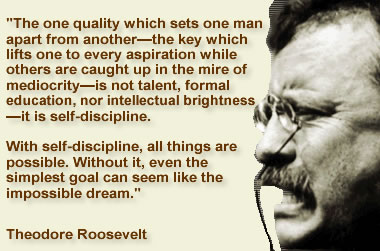
Self-Discipline, the father of entrepreneurship


Earlier in the year, before I landed a summer internship with a Great Lakes-area Venture Capital firm, I sifted through a stack of job postings to figure out where I would fit best.  It was common for applications to mention that their business was looking for "people with an entrepreneurial spirit".  This was phrased in multiple ways in different postings - sometimes as "innovative", or "a self-starter". 

But businesses specifically involved with entrepreneurship - commonly high-growth start-ups and venture capital firms - often described the entrepreneurial trait in different ways.  They would say they were looking for people who were self-driven, determined, or passionate with discipline.  So what's the difference?

When you work as a small part of a large business, you often have goals set out for you - sell X products, write X programs, design X spreadsheets.  And often, innovation in this line of work involves taking the time to figure out new ways to sell more products, write faster programs, or design more efficient spreadsheets. 

But when you work as a large part of a small firm or start-up, you may not always have goals laid out in black-and-white.  Much more responsibility lies on the shoulders of men and women who must not only do their job, but also define their job. 

That's where self-discipline comes into play.  With more responsibility comes much more indecision, stress, and soul-searching.  Self-discipline is vital to combating these with a healthy mentality.

John Song, a serial entrepreneur and avid blogger, said that optimism is the mother of entrepreneurship.  If so, then self-discipline is certainly the father.  I've gotten plenty of advice on how to stay self-disciplined when I started preparing for my first 5k run, so I attempted to consistently summarize, in just three steps, the best advice I've received.

1.  Understand your motivation.  Why are you doing this?  What benefit will it have for you or for others?

2.  Remove distractions.  An intense focus is needed to create a major change.  Focus on what is important, and cull the distractions and time-wasters from your life.

3.  Act as the person you want to be.  Want to be a marathon runner?  Act as though you already have the discipline of a marathon runner - train like one, eat like one, think like one, and before you know it you will become a marathon runner.  This trick works with all things in life as well.


Monday, June 3, 2013

The Week in Entrepreneurship - June 3rd


Today, the Department of Justice laid out their allegations of Apple's e-book price-fixing operation before a U.S. District Court in Manhattan.  The DOJ maintains that Apple was a key player in influencing competing e-book publishers to alter their pricing model, fundamentally changing the entire industry price system.  Brian Chen and Julie Bosman explain the allegations in this New York Times article. 

Funding News 


According to VentureBeat, Mithril Capital Management, a late-stage venture firm operated by PayPal co-founder Peter Thiel, may be close to boldly-investing where no VC firm has invested before - space.

The backpacker in me loves that BusBud, a mobile app seeking to connect bus routes around the world, completed their $1M funding round earlier this week.  The company hopes to eventually allow users to book bus tickets directly from the app, instead of just pointing users to the respective bus company website.

AppLift, a mobile games marketing platform from Berlin-based HitFox Group's incubator, is just 10 months old, but already has reached profitability.  To add to its success, it raised $13 million yesterday to invest in optimizing traffic quality and hiring additional talent. 

Closer to home, Gainesville-based Fracture, a company that creates on-demand durable glass prints of digital pictures, raised an additional $500k on top of its previous $1.5 million in funding.  

Tuesday, May 28, 2013

Teaching as Learning

When I was in high school, I took a beginners' statistics class over the summer at the University of Michigan.  The class was catered towards high school students, and the professor told us that, rather than just teaching statistics, he would teach us how to learn anything we wanted to know.  And, he said, it only took three steps:

Step 1: Recognize what you need to improve

Step 2: Gather information and make plans

Step 3: Repeat the skill until it is second nature

The steps were fairly intuitive.  But our professor went one step further.  He said that, if you could succeed in a fourth step, you could bypass the initial three steps altogether:

Step 4: Teach the skill to others

That last step, teaching the skill to others, is the ultimate test of mastery.  In the statistics class, we were challenged to teach our lesson plan to friends, family, strangers, and anyone who would listen. 

I took the last step to heart.  As an student entrepreneur, I want to discover more about entrepreneurship, and the best way to do that is by teaching it.  I hope this blog, The Eclectic Entrepreneur can be a way for me to glean entrepreneurial skills from a wide range of sources - and also be a resource for other entrepreneurs starting out on their journey.

For you, I want this blog to be a single location for the latest start-up news, entrepreneurial concepts, and case studies on how businesses got off the ground.  As Guy Kawasaki might say - the mantra for The Eclectic Entrepreneur is distilled entrepreneurial analysis. 

My current plan looks like this:

Monday:  This Week in Entrepreneurship, a distillation of the week's start-up news.

Wednesday:  My Take on entrepreneurial concepts and lessons from my own life.

Friday:  Start-up of the Week, analysis of a start-up and what we can learn from it.

So what's the future?

There are several future opportunities for The Eclectic Entrepreneur.  I envision it being a way to learn about, and connect with, the global entrepreneurial community.  I want to promote entrepreneurship across international borders and between industrial sectors.  And finally, I would like this to be a resource for me to connect with other bloggers and readers and learn from them as well.  So feel free to reach out.

---
If you have any suggestions for blogs to follow, news to gather, or start-ups to check out, email me at TheEclecticEntrepreneur@gmail.com.